 Sightseeing
 Saronic Gulf & Attica Coast: An Archaeological Route
The waters between Attica and the Peloponnese have been sailed for three thousand years, and the temples, sanctuaries and ruins along this route sit closer together than almost anywhere else in Greece. From our base in Lavrio, a week aboard one of our yachts traces a route through some of antiquity’s most significant sites — a sanctuary that once rivalled Delphi, silver mines that funded the Athenian navy, and a temple where sunset still draws visitors exactly as it did 2,500 years ago.
Cape Sounio (Attica)
The Temple of Poseidon at Sounio has watched over the Aegean since around 440 BC, its marble columns visible to sailors for miles — Lord Byron carved his name into one of them in 1810. Approaching by sea gives you the same view ancient mariners had on their way home to Athens.
Ancient Lavrion & the Theatre of Thorikos (Attica)
Our home port sits on top of one of the ancient world’s most important mining regions. The silver extracted from the Lavreotiki mines financed the fleet that won the Battle of Salamis, and the galleries themselves, along with the ore-processing washeries, are still visible near the port. A short distance inland is the Theatre of Thorikos, thought to be one of the oldest stone theatres in Greece, with an unusual elongated orchestra that predates the classical amphitheatre design.
Salamina
Salamis was the site of the decisive 480 BC naval battle in which the outnumbered Greek fleet destroyed the Persian navy — arguably the single most consequential day in ancient Greek history. The Tomb of the Salamis Fighters, a circular stone monument on the island’s north coast, commemorates those who died in the battle.
Aegina
Aegina packs three distinct archaeological sites into a single island. The Temple of Aphaia, on a pine-covered hilltop above Agia Marina, is one of the best-preserved Archaic temples in Greece, forming a geographic and stylistic “triangle” with the Parthenon and the Temple of Poseidon at Sounio. Kolona, on the edge of Aegina Town, holds the remains of the island’s ancient acropolis and a temple to Apollo. At the island’s southwestern tip, the Sanctuary of Zeus Hellanios is one of the most remote and least-visited ancient sites in the Saronic.
Poros
On the islet of Kalavria, opposite Poros Town, the Sanctuary of Poseidon was one of antiquity’s most important religious federations — the meeting place of the Kalaureian Amphictyony, a league of city-states from across the region. The orator Demosthenes is said to have taken his own life here rather than be captured by the Macedonians.
Hydra & Spetses
Hydra and Spetses tell a different story — both were sparsely populated in antiquity and rose to prominence far later, as maritime powers of the 18th and 19th centuries. Rather than ancient ruins, their character comes from grand stone captains’ mansions, naval museums, and a role in the Greek War of Independence: Spetses’ Bouboulina Museum and Hydra’s Historical Archives Museum are the best way to explore that history. Both are worth the stop for their harbours and atmosphere — just not for classical antiquity.
Nafplio & the Argolic Gulf (extended route)
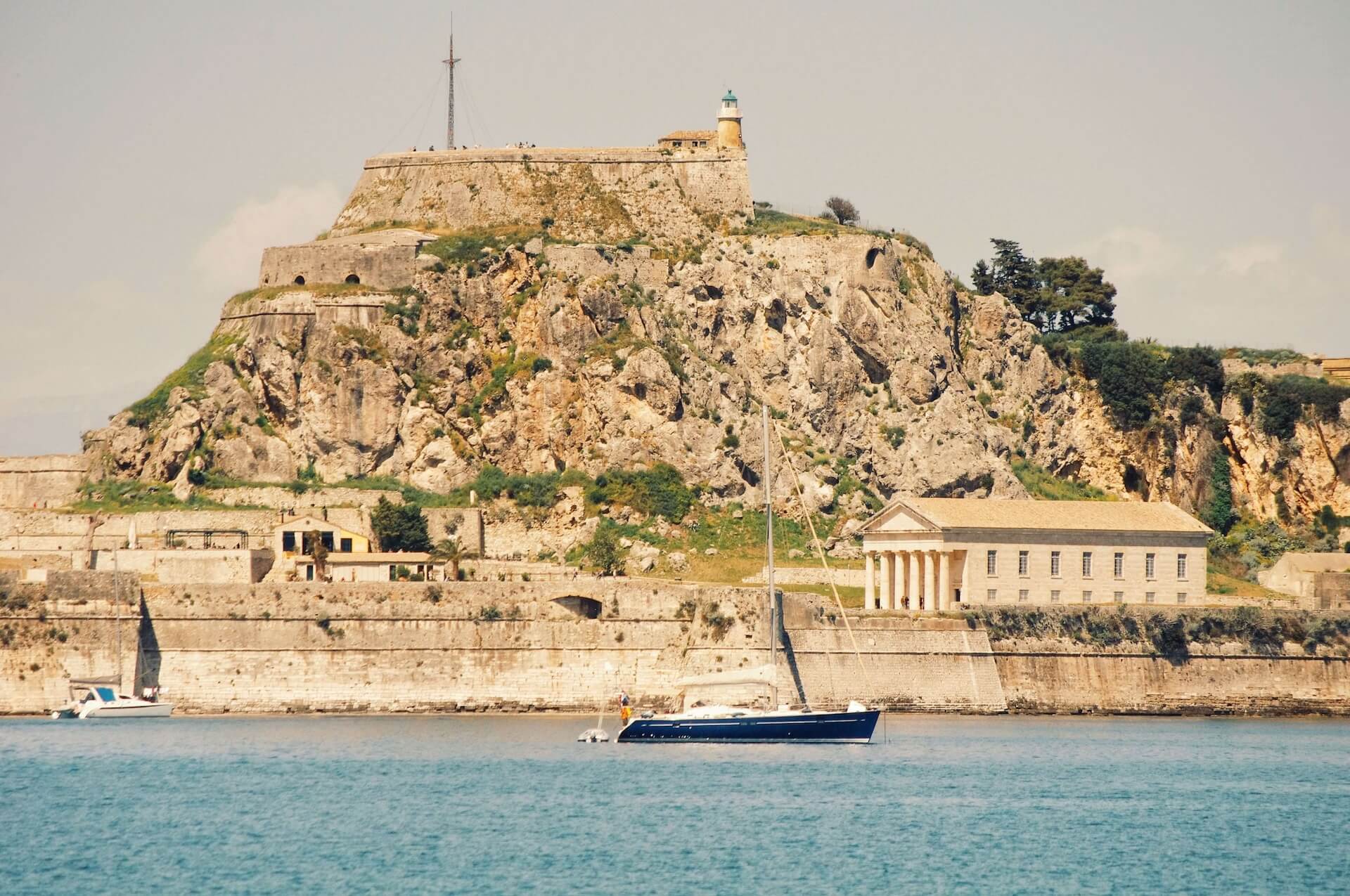
Just south of Spetses, the Saronic Gulf opens into the Argolic Gulf — and this is where the region’s most famous archaeology actually is. Nafplio makes a natural base for it, with a protected harbour of its own and, above the town, Acronafplia, one of the oldest fortified acropolis sites in Greece, continuously walled from prehistoric times through the Byzantine, Venetian and Ottoman periods.
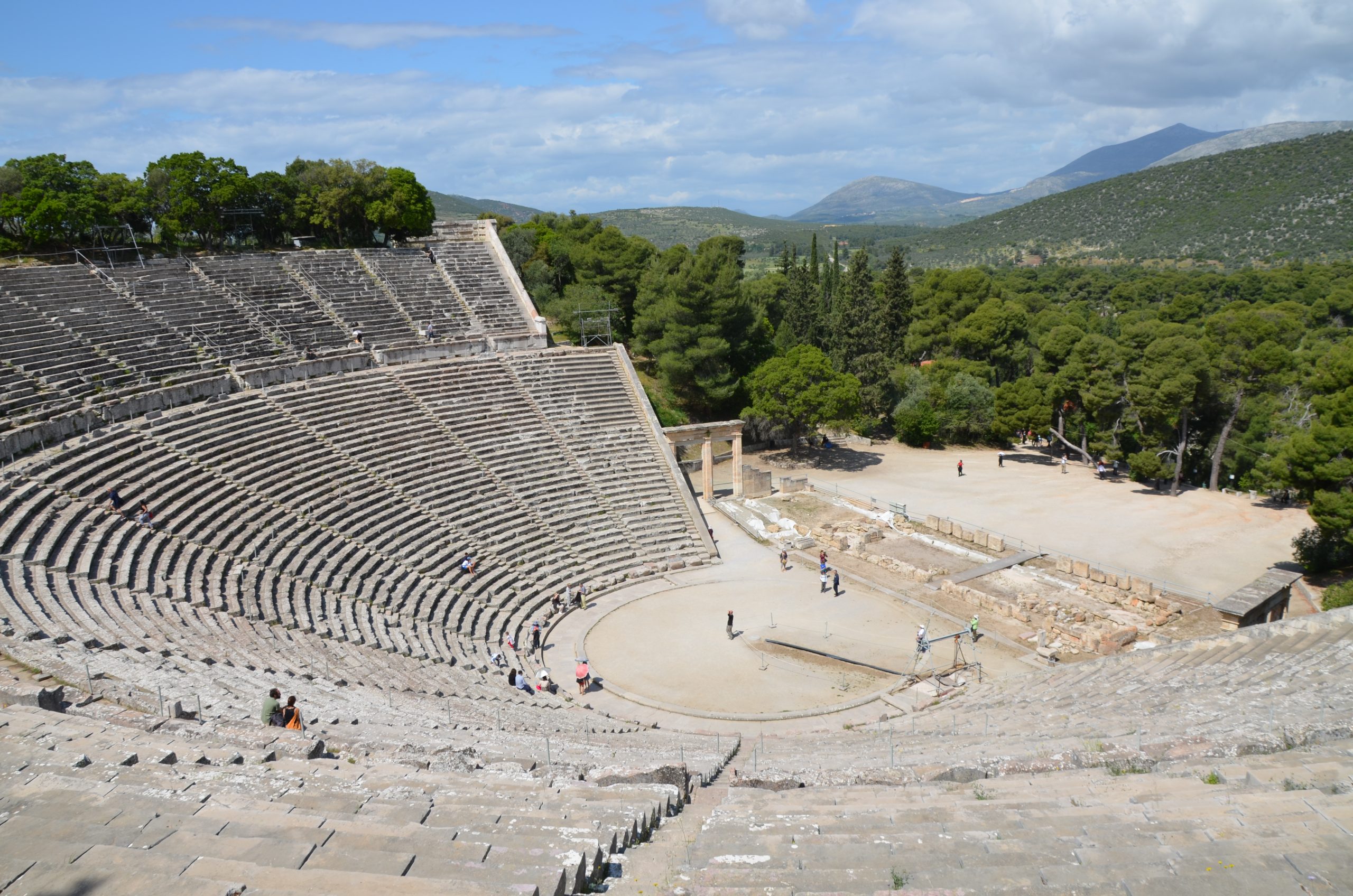
From Nafplio, three major sites are a short taxi or transfer away. Epidaurus holds the best-preserved ancient theatre in Greece — still used for performances today, and famous for acoustics so precise that a coin dropped on the stage can be heard from the top row — alongside the Sanctuary of Asclepius, antiquity’s leading centre for healing and medicine. Mycenae, the seat of Homer’s King Agamemnon, has the Lion Gate and the beehive-shaped Treasury of Atreus, among the most important Bronze Age remains anywhere in Greece. Tiryns, smaller and less visited, is a Mycenaean citadel with cyclopean walls so massive that later Greeks believed only the mythical Cyclopes could have built them. All three are UNESCO World Heritage Sites.
Note: Epidaurus, Mycenae and Tiryns are inland archaeological sites, not coastal ones — from Nafplio’s harbour, guests reach them by taxi, transfer, or organised excursion (roughly 30–50 minutes each way), not on foot from the boat.
Suggested 7-Day Route
- Day 1: Depart Lavrio, sail to Sounio (Temple of Poseidon), anchor overnight nearby.
- Day 2: Sail to Aegina — Temple of Aphaia, Kolona.
- Day 3: Aegina to Poros — Sanctuary of Poseidon at Kalavria.
- Day 4: Poros to Hydra — maritime heritage, harbour town.
- Day 5: Hydra to Spetses.
- Day 6: Spetses to Salamis — Tomb of the Salamis Fighters.
- Day 7: Salamis back to Lavrio, stopping at the Theatre of Thorikos en route.
Extended 10–11 Day Route (adding Nafplio & the Argolic Gulf)
- Days 1–5: as above, Lavrio → Sounio → Aegina → Poros → Hydra.
- Day 6: Hydra to Spetses.
- Day 7: Spetses to Nafplio — Acronafplia, overnight in the harbour.
- Day 8: Excursion day from Nafplio — Epidaurus and Mycenae (or Tiryns, if time allows).
- Day 9: Nafplio back to Spetses or Hydra.
- Day 10–11: Retrace the route back to Lavrio via Aegina and Salamis.